Paper Programme or Digital Matchday Page? Choose the Record You’ll Revisit
Compare a paper programme with a digital matchday page to choose a match record that stays browsable, captures updates and suits the way you revisit it.
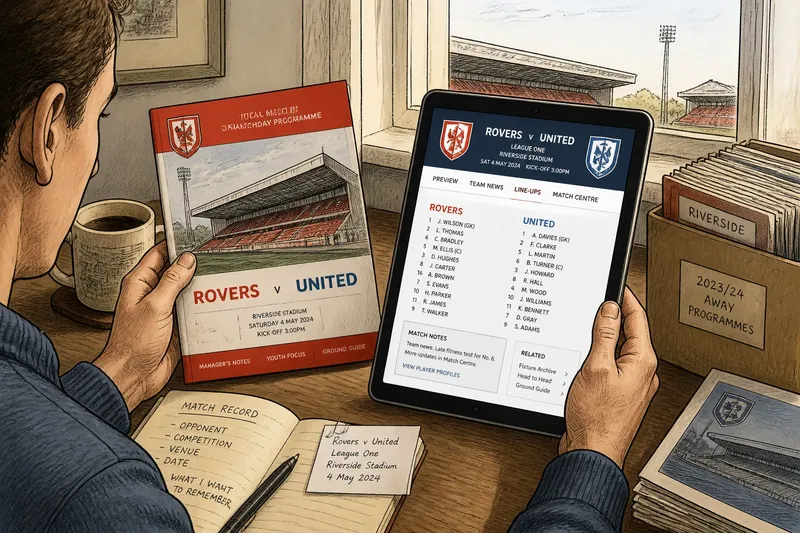
You find an old match programme tucked inside a coat pocket, open it, and the team sheet is still there. A digital matchday page can hold more updates, but it may be harder to return to if its link has vanished. Choosing between a paper programme and a digital matchday page comes down to what you want your record to preserve—and the problems you are willing to manage.
Think of either format as a keepsake, not just a place to check the lineup. One gives you a fixed object to browse; the other can adapt as information changes. If you already know which parts of matchday matter most to you, the choice gets clearer.
What do you want the record to hold?
Start with the material you expect to revisit. A printed programme works well for things that make sense as a complete edition: a cover, an editor’s note, a squad list, a ground illustration, and the details available before the match. You can browse without a device or an internet connection, and the pages remain in the order chosen by the designer.
A digital page suits content that may change or benefit from links. It can carry a late lineup update, a clickable fixture archive, audio, or a route to more information about a player. That flexibility can make it useful on matchday, though its appearance and contents may shift after the event.
Decide what “lasting” means to you. If you want to hold the original layout and keep it on a shelf, print has the edge. If you want to search names, follow links, or see updates without carrying an extra item, digital may fit better. Neither format automatically preserves every detail; the important question is which details you would miss.
Why does a programme feel harder to browse later?
One common frustration is opening a programme months later and being unable to tell which match it belongs to. A club crest or season name may appear clearly on the cover, while the opponent, venue, or date is buried inside—or missing from the copy you saved. The cause is often a design that favors a striking front over useful identification.
Before buying or keeping a printed copy, check the cover and the first few pages for the opponent, competition, venue, and match date. If one is absent, make a small note on a removable paper slip and store it with the programme rather than writing on a collectible cover. A clear label on its storage sleeve can also help you browse a collection without handling every item.
Another snag is a programme that feels disposable because it is mostly advertising or repeats information you could get elsewhere. That usually reflects a mismatch between the publication and what you value, not a flaw in paper itself. Look for editorial details you want to keep, such as a manager’s notes, a ground map, a youth-team feature, or artwork tied to the fixture. It is not worth saving every edition just because it was handed to you; keep the ones that carry a detail you expect to revisit.
Why does a digital page lose its usefulness?
A page that was easy to open on matchday may later load without the lineup, redirect to a general club page, or disappear. The likely issue is that the content depends on a live site, a changing address, or a service that no longer displays older fixtures. A bookmark alone may preserve the route, not the page as it looked.
When a page matters to you, save the information in a form you can still identify later. Use the browser’s print function to create a PDF when available, or take a screenshot of a specific section such as the team sheet or match notes. Give the file a descriptive name that includes both clubs and the competition, then keep it in a folder you already use for match records. Check that the saved copy opens before relying on it.
Digital pages also become awkward when alerts and scrolling bury the content you wanted. If your goal is a calm browse, open the page after the match and save only the sections you care about, rather than keeping a stream of live updates. For a changing lineup, though, an updateable page can be the better record: it can distinguish an early selection from a confirmed one without replacing a printed edition.
How can you keep both formats from duplicating each other?
Buying the programme and saving every page online can create two records with the same information and no clear reason to keep either. Choose different jobs for them. Let the programme hold the designed, fixed edition; use the digital page for updates, links, and details that are useful only while preparing for or attending the match.
Say you collect programmes from away fixtures but mainly want the final team sheet. Keep the printed issue if its cover or ground feature marks the visit, then save a PDF or screenshot of the confirmed lineup if the programme went to print before it was announced. The result is a physical reminder and a focused digital note, rather than a duplicate archive.
If you do not want both, make the decision before matchday. Ask whether you are more likely to revisit a physical page or search a digital file, and whether the content you value is fixed or liable to change. That small choice can prevent a stack of unwanted paper or a folder of screenshots you never open.
Which format fits the problem you have?
Can I keep a digital matchday page after the season?
You can save a copy if the page and your device allow it, but a saved file may not preserve interactive features or later changes. Keep a descriptive filename and confirm that the local copy opens.
Should I buy a programme if the lineup may change?
Buy it for the edition’s other content, not as the sole record of a lineup that has not been confirmed. Check the digital page for a later update if that distinction matters to you.
What should I save from a digital page?
Keep only details you expect to revisit, such as the confirmed team sheet, a match note, or a link’s essential text. A focused capture is easier to recognize and browse than a full page of unrelated content.
How do I choose if I enjoy both formats?
Give each one a separate purpose: let print preserve the designed matchday object and digital preserve updates or searchable notes. If the two would contain the same material, choose the one you are more likely to reopen.
What should you check before choosing?
- Match identification: Can you tell the opponent, competition, venue, and date from the record? Add a removable label or file name if needed.
- Content that changes: Does the lineup or match information need updates? Prefer a digital page for changing details, then save a fixed copy if you want to retain them.
- Content that deserves a physical copy: Is there artwork, writing, or a layout you want to hold and browse? Choose the programme for that experience.
- Access later: Will you be able to open the page or file without relying on a live link? Save a local copy when that matters.
- Collection habits: Do you have a place to store paper or a folder you actually search? Choose the format that fits your existing way of keeping things.
- Overlap: Would both formats preserve the same details? If so, keep one and give the other a distinct job only when it adds something useful.
A paper programme or digital matchday page is a better keepsake when you can recognize it and still reach the detail you wanted. Before the next fixture, choose one thing you hope to remember and decide which format will preserve it with the least fuss. For changing information, keep an updateable page; for a designed object you want to browse away from a screen, choose print.