The Turnstile and the Ritual of Arrival
The turnstile ritual of arrival can make a matchday easier to share. Choose a gate, meeting point, or route that helps supporters gather and enter clearly.
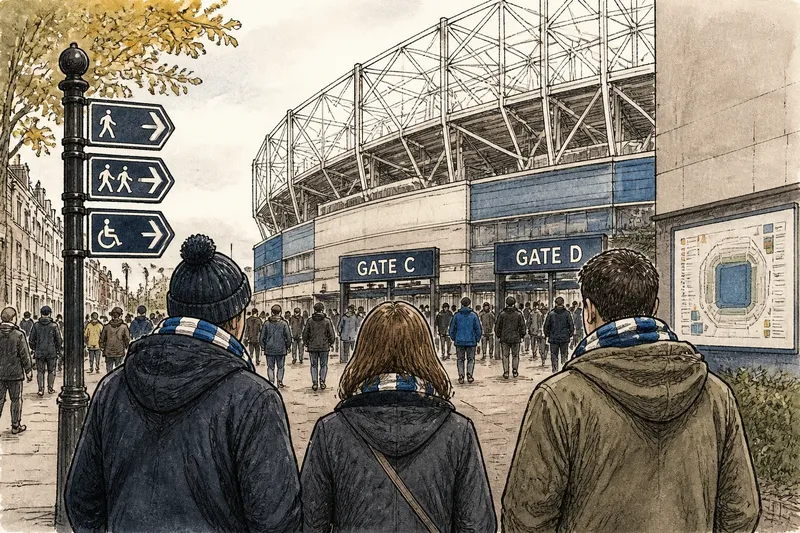
You step off the bus with your scarf tucked into your coat and spot the stadium lights above the roofs. The turnstile ritual of arrival can center on one of three things: the gate, a nearby meeting point, or the route to the ground. Choose the one that best helps people find each other and reach the right entrance.
A gate-centered routine gives supporters a recognizable entrance. A meeting-point routine lets them regroup before walking to their entrances. A route-centered ritual makes the walk itself part of matchday. None is right for every ground; the choice depends on how people arrive, where they need to go, and what the space can comfortably accommodate.
What makes an entrance feel like matchday?
A turnstile marks a practical boundary: outside, people are on their way; inside, they are attending. But arrival often feels like a transition before anyone reaches the barrier. A familiar sign, a vendor’s call, the sound of voices gathering, or a pause to greet friends can all signal that the occasion has begun.
Repeated routines give those cues meaning. Supporters may meet near a particular entrance, join a familiar queue, or look for friends by a recognizable landmark. The sequence helps regulars feel at home and gives newcomers clear things to follow.
Think of the entrance as a threshold people use, not a decoration. It works when the approach is understandable, groups can wait without blocking others, and arriving supporters can identify the entrance serving their seats.
Should the gate or the gathering place lead?
Start by deciding whether the gate, a nearby meeting point, or the walk is the best center for arrival. Each option supports a different pattern.
What does a gate-centered ritual offer?
Supporters meet at or near the same clearly named entrance. This can suit regular attendees and groups whose tickets are for the same section. Use consistent gate names, plain directions, and a waiting spot that does not obstruct the queue.
A gate is easy to name, but it may confuse visitors who do not know the ground or people with seats elsewhere. Pair the routine with official directions and remind each supporter to follow the entrance printed on their ticket.
When should the meeting point come first?
A meeting-point routine starts at a nearby landmark, such as a public square, station exit, or open forecourt. It can help friends arriving from different directions regroup before heading to their separate entrances.
Choose a place that is easy to describe and leaves room to wait. Avoid relying on a private business or a narrow sidewalk, and make clear whether the spot is an official club arrangement or an informal supporter custom.
Can the walk itself become the ritual?
For some groups, the route is the shared part of arrival: familiar streets, storefronts, and the gradual approach to the ground. This can suit people traveling together who enjoy making the journey part of the occasion.
Keep the route understandable and allow for different paces and mobility needs. Do not make a shortcut, blocked pavement, or exact starting point a test of belonging. Offer an accessible alternative and a sensible place to join the group.
How do you choose an arrival ritual for a ground?
Look at how people already arrive before choosing a ritual. Ask supporters, stewards, and people responsible for access to consider these observations and decisions:
- People naturally pause in a safe, open area. If the space has room for groups to wait, use it as a possible meeting point; if it is crowded or obstructive, identify a more spacious nearby landmark.
- First-time visitors cannot identify the entrance. If gate names or directions are unclear, improve the signs and official guidance first; if they are clear, a gate-centered routine may be easier to communicate.
- Friends arrive in separate waves. If they need to regroup, choose a meeting point away from queues; if most arrive independently, prioritize direct directions to the gate on each ticket.
- The route includes steps, narrow pavements, or difficult crossings. If these create access barriers, identify and communicate an accessible alternative with the people who use it; if the route works for the group, keep its directions simple and visible.
- Waiting groups could affect queues or neighbors. If gathering would block an entrance or path, move the meeting spot; if people can wait without obstructing others, explain where to stand.
- Supporters use different entrances for different sections. If they do, meet before the entrances and then separate according to ticket details; if they share an entrance, consider making that gate the common destination.
Say a group has three friends arriving at a public library from two train stations. One has a ticket for a different section and needs a step-free route. They first agree to meet at the library, then check the gate names and access directions on their tickets and the stadium map. They decide to walk together as far as the junction, where the friend needing the step-free route takes the marked accessible approach and the others continue to their assigned gate. The expected observable result is that everyone knows where to meet and which entrance to use, without requiring the whole group to take one route. If the library forecourt is crowded, they choose a nearby open plaza instead.
What should the club communicate before people set out?
Connect any arrival custom to practical access information. Give the official gate name, a recognizable landmark, directions from common transport stops, and clear information about which entrances serve which areas. Explain where accessible entry is located and whether a gathering point is part of the club’s plan or an informal custom.
Keep the information consistent across tickets, stadium maps, and matchday notices. Local nicknames may mean something to regulars but leave visitors guessing. “Meet outside the east entrance, beside the public plaza” is more useful than an unexplained phrase passed on by word of mouth.
Elaborate arrival branding is not worth the effort if it adds no useful cue. A sign or landmark helps when it makes a place easier to recognize, helps friends find each other, or points people toward the right entrance; decoration cannot fix unclear directions.
Which arrival questions do supporters ask?
Is it better to meet outside the turnstiles or inside the ground?
Meet outside if the group needs time to gather, check tickets, or walk to an entrance together. Meeting inside can suit people who already have access and know the ground, but it does not replace a clear exterior meeting point.
What if friends have tickets for different sections?
Choose a public meeting place before the entrances, then let each person follow the gate printed on their ticket. This separates the social part of arrival from the access needs of each section.
How can a new supporter join an established routine?
Share the location in ordinary terms, including a nearby street or landmark and the relevant gate name. Make it possible to join without knowing a chant, nickname, or unspoken custom.
Can the arrival ritual change from match to match?
Yes. Transport disruption, weather, crowding, or a different venue may make another route or meeting point more sensible. Keep the purpose—helping people gather and enter clearly—while adapting the place.
How can a familiar entrance stay welcoming?
Familiarity can make a ground feel like home, but the entrance should not become a private code. Use the same gate names in official information, make accessible routes easy to find, and let supporters explain informal customs without presenting them as rules. Stewards can help by giving clear directions and making room for people who need to wait.
The turnstile ritual of arrival works best when people can repeat it without treating it as fixed. Keep the useful parts—the landmark, the walk with friends, or the shared approach to the queue—and change anything that makes entry confusing or excludes someone. Before setting out, check the ticket and current stadium directions; the right meeting place cannot replace the right gate.